
Keep Running Strong with Sports Therapy for Injury Recovery and Prevention

Updated: 2 days ago
A running injury rarely arrives out of nowhere. More often, it starts as a niggle after a long run, a tight calf that never quite settles, or a knee that complains on hills. If I ignore it for too long, my body finds ways to cope until one small issue becomes the thing that stops my training completely.
Sports therapy and soft tissue therapy help runners understand what is happening, calm irritated tissue, restore movement, and build the strength to keep going. The aim is not just to get through the next session. It is to keep me running well enough to reach the finish line, whether that is a 5K, half marathon, a trail race, or simply a pain-free Sunday run.

Why Runners Get Injured
Running is repetitive. That is part of its appeal and part of its risk. Each stride asks my foot, ankle, knee, hip, pelvis, and spine to absorb load, transfer force, and repeat the same pattern thousands of times.
When the load is sensible, and recovery is good, my body adapts. Muscles get stronger, tendons tolerate more force, bones remodel, and running starts to feel easier.
Problems often appear when the demand rises faster than my body can adapt. Common triggers include:
A sudden jump in mileage
Too many hard sessions close together
New shoes or a change in running surface
Hill work before my calves and glutes are ready
Poor sleep or low recovery
Weakness around my hips, calves, or feet
Limited ankle, hip, or thoracic mobility
Returning too quickly after time off
The pain may show up in one place, but the cause may lie elsewhere. A sore knee may link to hip control. Achilles irritation may involve calf capacity and ankle mobility. Shin pain may relate to training load, footwear, foot mechanics, or bone stress.
That is why good sports therapy looks at the whole runner, not only the painful spot.
Common Running Injuries That Respond Well to Sports Therapy
Sports therapy can support many running-related injuries, especially when treatment is paired with smart load management and progressive rehabilitation.
Calf Tightness and Achilles Irritation
The calf complex works hard during running. It helps control landing, stores elastic energy, and pushes the body forwards. Tight calves, cramping, or Achilles pain can build when speed work, hills, or mileage increase too quickly.
Treatment may include soft tissue release, calf and soleus work, ankle mobility drills, and gradual strengthening. Heavy, controlled calf raises often play a useful role once symptoms allow.
Runner’s Knee and Kneecap Pain
Pain around or behind the kneecap often becomes noticeable on stairs, hills, or longer runs. The knee may feel sore rather than unstable. In many cases, hip strength, quad control, foot mechanics, and training load all matter.
Hands-on therapy can reduce local muscle tone and improve comfort, but rehab needs to build better control through the hip, thigh, and lower leg.
Iliotibial Band-Related Pain
Pain on the outside of the knee is often blamed on a “tight IT band.” The IT band itself is tough connective tissue, so the focus is usually on the muscles that feed into it, such as the glutes and TFL, plus running volume, stride habits, and hip control.
Soft tissue therapy can ease tension around the lateral thigh and hip. Strength work then helps the pelvis and knee track more efficiently under load.
Shin Pain
Shin pain needs care. It may come from irritated muscles and tendons, but it can also be linked to bone stress. Pain that worsens during a run, lingers afterwards, or feels very localised to the bone should be assessed promptly.
Treatment may involve reducing impact for a short period, improving calf and foot strength, checking ankle mobility, and planning a gradual return.
Plantar Heel Pain
Pain under the heel or arch is often worse first thing in the morning or after sitting. Runners may feel it ease once warmed up, only for it to return later.
Soft tissue work to the calf, sole of the foot, and ankle can help symptoms settle. Rehab often includes foot strength, calf loading, and careful management of speed and hill sessions.

How Sports Therapy Assesses the Real Problem
A useful appointment should feel like more than a quick rub-down. A good sports therapy assessment connects the story, the symptoms, and the way my body moves.
It may include:
A conversation about training history, shoes, surfaces, recent changes, and pain behaviour
Joint range of movement checks
Muscle length and strength testing
Balance and single-leg control
Functional tests such as squats, lunges, calf raises, or hopping
Palpation to identify sensitive or overloaded tissue
Running-specific discussion and sometimes gait observation
The goal is to answer practical questions:
What tissue seems irritated?
What movement or load provokes it?
What can safely continue?
What needs changing for a short time?
What strength or mobility deficits need work?
How can running return without restarting the injury cycle?
This matters because I often fear being told to stop completely. In some cases, rest is necessary, especially with suspected stress fractures, acute tears, or severe pain. More often, treatment aims to keep some level of activity going while reducing the specific load that is driving symptoms.
For example, I may pause hills and sprints but continue easy flat runs within a pain-guided limit. Someone with kneecap pain may reduce downhill work and long runs while rebuilding hip and quad strength.
The plan should fit me, not the other way round.
Soft Tissue Release Helps Restore Comfort and Movement
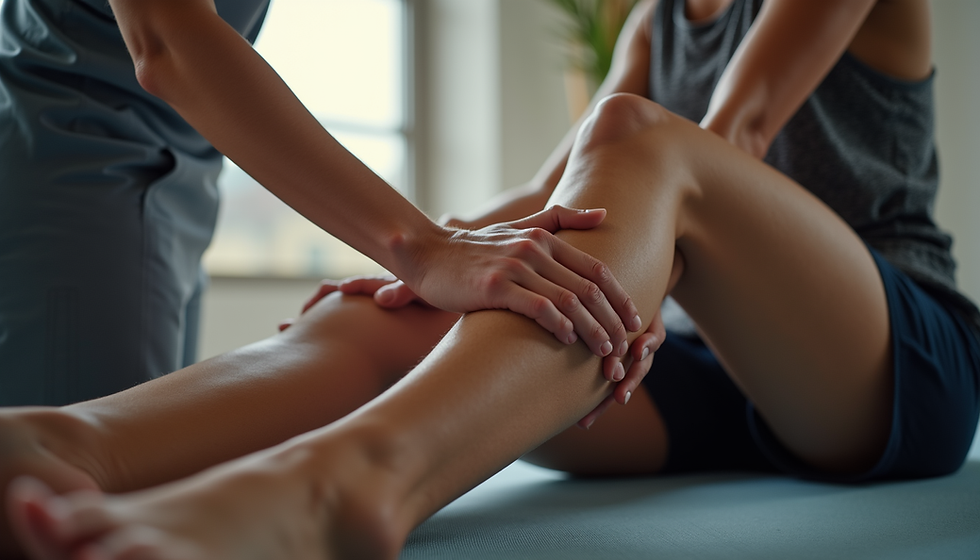
Soft tissue release is a hands-on approach used to reduce unwanted tension, improve sliding between tissues, and increase comfortable range of movement. It may target muscles, tendons, fascia, and areas that feel guarded after overload.
For runners, soft tissue work commonly focuses on:
Calves and soleus
Hamstrings
Quads and hip flexors
Glutes and deep hip rotators
Adductors
Feet and plantar fascia
Upper back and rib cage, especially for posture and breathing
The pressure should be purposeful, not brutal. A treatment does not need to leave bruises to be effective. The best results often come from combining manual therapy with movement. That might mean the therapist applies pressure while I actively move the ankle, knee, or hip through a controlled range.
Soft tissue release can be useful when I feel restricted, heavy-legged, or protective around an injured area. It can reduce discomfort enough to make rehab exercises feel smoother and more natural.
It is one part of the plan, not the whole plan. If training load, strength, and mobility are ignored, the same tightness will usually return.
K-Tape Can Support Movement Without Locking You Down
Kinesiology tape, often called K-tape, is the stretchy coloured tape seen on many runners at races. It does not “fix” an injury on its own, but it can be useful in the right setting.
K-tape may help by:
Giving gentle sensory feedback
Supporting a sore area without rigid restriction
Reducing the feeling of pull or strain
Helping me feel more confident during movement
Encouraging awareness of posture or joint position
It can be used around the knee, calf, Achilles, shin, foot, hip, or shoulder area depending on the problem. For example, I may feel more comfortable with tape that guides patellar tracking if I have mild kneecap irritation. A runner with calf tightness may use tape as part of a short-term support plan during return to running.
Tape should never be used to mask worsening pain. If it is the only reason I can get through a session, the training plan likely needs adjusting.
Skin sensitivity also matters. Tape should be removed if it causes itching, irritation, blistering, or redness.

Muscle Energy Techniques Can Improve Range Without Forcing It
Muscle energy techniques, often shortened to METs, use gentle muscle contractions to help improve joint movement and reduce tone. I contract a muscle against light resistance from the therapist, then relax as the joint or muscle moves into a new range.
This technique can be helpful when a joint feels stiff or a muscle feels guarded, but aggressive stretching would be too much.
Common running-related uses include:
Hip flexor restriction
Hamstring tightness
Calf and ankle stiffness
Pelvic or lower back tightness
Thoracic spine mobility limits
METs work well because they involve me actively. The nervous system gets a clear signal that the position is safe, which can allow movement to improve without forcing tissue.
For example, if I have limited hip extension, I may be overusing my lower back or hamstrings to compensate. Gentle MET work around the hip flexors and pelvis, followed by glute activation and stride drills, can help my body find a cleaner running pattern.
Stretching Needs the Right Timing and Purpose
Stretching is useful, but timing matters. Passive and active stretching both have a place in running injury care.
Passive stretching means an external force holds the stretch. That might be a therapist, a strap, a wall, or body weight. It is often used after treatment, during cool-down, or as part of a mobility routine.
Active stretching uses my own muscles to move into and control a range. It can be more specific for running because it teaches control as well as length.
Before a run, I do better with dynamic mobility rather than long static holds. Examples include leg swings, walking lunges, calf pulses, hip circles, and controlled skips. These prepare my body for movement without making it feel sluggish.
After a run, gentle passive stretching can help bring attention back to tight areas and maintain mobility. It should feel like mild to moderate tension, not sharp pain.
The key is purpose. Stretch because a specific area lacks useful range or feels overactive. Do not stretch every muscle hard just because it is part of an old routine.
Rehab Exercises Turn Short-Term Relief Into Long-Term Progress
Hands-on therapy can reduce pain and improve movement, but rehab is what makes the change last. A good programme should build from simple control to running-specific strength.
Early rehab may include:
Isometric holds for pain relief and tendon loading
Gentle mobility drills
Activation work for glutes, calves, feet, or quads
Balance exercises
Low-impact conditioning such as cycling or swimming
As symptoms improve, the work should become more demanding:
Single-leg calf raises
Split squats
Step-downs
Romanian deadlifts
Lateral band walks
Hamstring bridges
Hopping and landing drills
Gradual plyometrics
Hill and pace reintroduction
The exercises should match the injury. If I have Achilles pain, I need calf and tendon capacity. If I have knee pain, I often need hip, quad, and landing control. If I have hamstring symptoms, I may need progressive hamstring strength and sprint exposure, not just stretching.
Rehab should also respect recovery. More exercises are not always better. A short, consistent plan done well often beats a long list performed twice and forgotten.
If I am searching locally for massage Tiverton or sports massage Tiverton, I look for a therapist who can combine hands-on treatment with clear rehab, not just a one-off session that feels good for an hour.

Prevention Is About Managing Load, Not Chasing Perfection
Injury prevention does not mean avoiding every ache. I train close to my limits at times, and my body will sometimes feel tired or stiff. The goal is to notice patterns early and adjust before a niggle becomes a setback.
A useful prevention routine includes:
Strength training twice a week
Focus on calves, quads, hamstrings, glutes, trunk, and feet. Keep it simple and progressive.
Mobility Where You Need It
Ankles, hips, and thoracic spine often deserve attention. Choose drills that improve my running movement.
Warm-Ups Before Harder Sessions
Easy jogging plus dynamic movement prepares tissues for speed, hills, and intervals.
Recovery Between Demanding Runs
Hard sessions need space. Back-to-back intensity raises injury risk for many runners.
Footwear That Suits My Body and Training
Shoes do not need to be fashionable. They need to feel comfortable, match the terrain, and support my current workload.
Early Treatment for Repeated Niggles
If the same tightness appears every week, I treat it as information. My body is asking for a change.
Small adjustments can make a big difference. Swapping one hard run for an easy run, adding calf strength, changing hill volume, or booking treatment early may keep me training when I would otherwise be forced to stop.
When to Keep Running and When to Pause
One of the hardest questions is whether to run through pain. A simple pain scale can help, but it should not replace judgement.
Running may be acceptable when:
Pain stays mild and does not change my form
Symptoms ease as I warm up
Pain settles quickly after the run
There is no swelling, limping, numbness, or sharp pain
The next morning feels the same or better
Running should stop or be reduced when:
Pain gets worse during the session
I change my stride to avoid discomfort
Symptoms linger or increase after running
Pain is sharp, local, or bone-like
There is swelling, bruising, locking, giving way, or loss of power
I feel unwell or the injury followed a clear trauma
A therapist can help build a return-to-running plan. This might use run-walk intervals, easy flat routes, rest days between runs, or short test runs before longer sessions. The plan should progress only when symptoms respond well.
The Finish Line Belongs to the Runner Who Adapts
Running rewards consistency, but consistency does not mean pushing through every warning sign. It means listening early, treating the cause, and building a body that can handle the next mile.
Sports therapy and soft tissue therapy give me practical tools: soft tissue release for comfort and mobility, K-tape for short-term support, muscle energy techniques for controlled range, stretching for movement, and rehab exercises for strength that lasts.
The best injury plan is not dramatic. It is clear, steady, and specific. Calm the irritated tissue, adjust the load, rebuild capacity, then run forward with more confidence.
That is how I keep running strong, from the first training block to the finish line.


Comments